The “Conserving Every Drop” project, focused on enhancing water access and conservation in Hoskote taluk, Bangalore Rural district, successfully concluded its second year of intervention, achieving all targets set from November 2022 to October 2023. The project aimed to address water scarcity issues through a combination of water storage and recharge activities, community capacity building, and leveraging government programs.
Ensuring Water Security through Water Storage and Recharge Activities
Table of Contents
Rooftop Rainwater Harvesting: The project installed rooftop rainwater harvesting structures in five public buildings, including government schools and primary health centers. These structures are capable of harvesting approximately 4691.84 CuM of rainwater annually, indirectly benefiting 7,912 people.
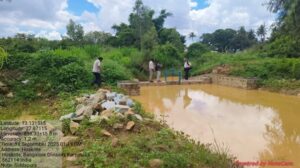
Field Pond Restoration: Two field ponds in Chinnandahalli and Muthugadahalli villages were restored on common land, enhancing water storage capacity and facilitating groundwater recharge. These restored ponds are expected to harvest approximately 4273 CuM of rainwater annually, indirectly benefiting 182 households with a total population of 775.
Check Dam Renovation and Injection Bore Well Recharge: Four abandoned check dams were renovated to support groundwater recharge, estimated to harvest approximately 5868 CuM of rainwater. Additionally, two injection bore well recharge structures were installed in villages with severe water scarcity, recharging around 1653 CuM of rainwater and indirectly benefiting 685 people.
Sustainability through Capacity Building of the Community
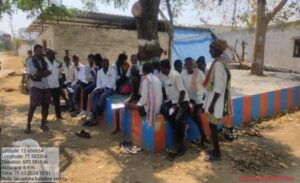
Training on Water Security: The project provided training to 139 individuals from 10 villages, including women and youth, on various water conservation methods such as rooftop rainwater harvesting, farm ponds, and borewell recharge pits, 47 of these participants were further trained as Master Trainers to disseminate knowledge on water security and conservation at the village level.
Strengthening Village Water and Sanitation Committees (VWSCs) and User Committees: The project revitalized Village Water and Sanitation Committees (VWSCs) in 12 villages, training members on their roles in water conservation and groundwater management. In Narayanakere village, the VWSC played a key role in improving irrigation channels, indirectly benefiting 386 households. Similarly, in Dabbagunte village, the VWSC successfully implemented greywater management initiatives, protecting 55 households from water contamination.
Awareness Campaigns: Awareness generation campaigns were conducted in five Gram Panchayats, focusing on promoting water conservation behaviors. A total of 190 individuals, including Gram Panchayat members, Anganwadi teachers, and Asha workers, participated in these campaigns.
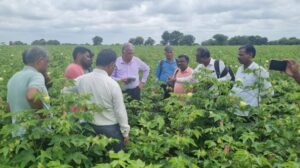
Scaling up through Capacity Building for Government / Leveraging Other Government Programs Training Government Officials: The project trained 24 local government members and staff on water security, water budgeting, and sustainable water management practices. This training included field exposure and knowledge sharing sessions, equipping officials with the skills needed to integrate water conservation measures into local governance.