Establishing and maintaining proper sanitation facilities is essential for creating a safe and healthy environment in rural areas. The importance of safe sanitation practices, both at individual and community levels, is vital for protecting health, the environment, and the economy. The Swachh Bharat Mission (Gramin) renewed the focus on rural sanitation, resulting in Karnataka’s declaration as Open Defecation Free (ODF) in 2018. However, the Swachh Karnataka vision now extends beyond toilet construction to sustaining safe sanitation practices and effectively managing solid and liquid waste in rural areas.
At the heart of this vision, OUTREACH’s project of Rural Soild Waste Management and Health and Sanitation is being implemented in 75 Gram Panchayats in Hunsur, K.R. Nagar and Saligrama Taluk in Mysuru district, while in Arkalgoodu Taluk (Hassan district) only the health and sanitation activities are being implemented. This comprehensive initiative includes raising community awareness about sanitation, emphasizing hygiene and health, and ensuring the establishment of sanitary facilities in schools and anganwadis—key centers for learning and community engagement.
Rural Solid Waste Management
Table of Contents
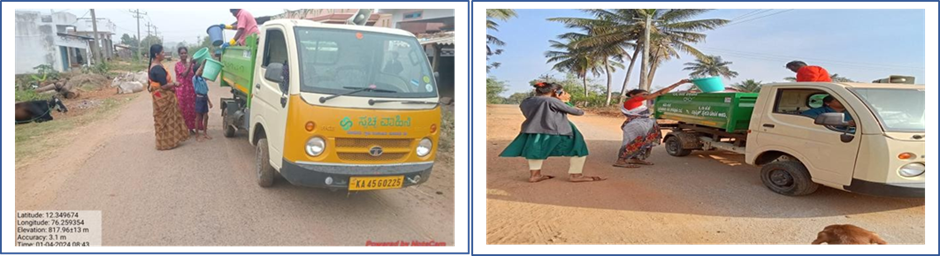
Aligned with the Karnataka State Rural Sanitation Strategy, the project entrusted primary door-to-door waste collection to Gram Panchayat’s personnel, supported by community-based organizations. The rural context is particularly conducive to composting, as the predominant solid waste generated in villages is biodegradable in nature. To encourage waste segregation, awareness programmes were carried out among 1,04,170 households within the project area. In addition, 3 workshops and 60 meetings were conducted at the village level, 2 training sessions and visits were organised for Gram Panchayat members (covering 256 elected representatives), and 2 events were held at the Zilla Panchayat level. As part of the Information, Education, and Communication (IEC) activities, signage about Rural Solid Waste Management (RSWM) was put up in 30 locations, and two types of brochures were distributed in all 75 project villages in Mysuru district.
In order to strengthen the access to government schemes and financial assistance for entrepreneurship, training on financial literacy and social security schemes were conducted which benefitted 713 women from 96 self-help groups.
Lighthouse Initiative
The Lighthouse Initiative commissioned by the Ministry of Drinking Water and Sanitation is an intervention for the sanitation ecosystem, to be implemented in a public-private partnership mode. It envisions to establish and sustain the selected villages as Open Defecation Free plus. The villages which would qualify as model Lighthouses would be used as positive examples across the country encouraging other villages to follow suit. Bilikere Gram Panchayat in Hunsur taluk was one of the selected Taluks. Capacity-building trainings targeted various groups, including elected representatives, self-help groups, waste collectors, youth associations, senior citizens, school children, School Development and Monitoring Committee (SDMC) members, and teachers. Activities such as street plays, wall paintings, and door-to-door visits were carried out to raise awareness. These efforts led to significant achievements, including the construction of 183 toilets (single pits), two twin pit toilets, 9 toilets retrofitted with additional pit, 83 soak pits constructed for household level grey water, and grey water in-line treatment plants in 3 locations. As a result, Bilikere Gram Panchayat was declared an LHI Model Village in November 2023, in the presence of Zilla Panchayat Mysore, ITC MSK, and Bilikere Gram Panchayat officials.
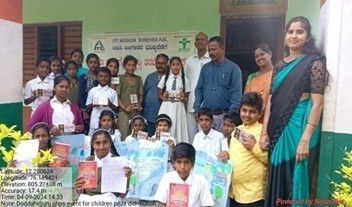
Community development and Water, Sanitation and Hygiene
A crucial aspect of the project is instilling sanitation practices in children from a young age. In line with the Swachh Bharat Mission (Gramin) guidelines, the project undertook a series of essential activities in the post-ODF phase, including the construction of 5 school toilets and 8 anganwadi toilets, significantly improving sanitation facilities for children and the broader community. The project also established 5 drinking water systems and 5 hand wash platforms in schools, enhancing hygiene and accessibility.
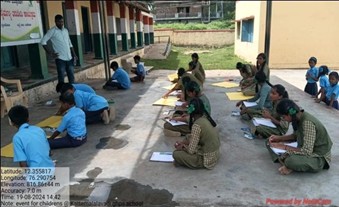
The project emphasized raising awareness and building capacity by strengthening various committees, such as 22 Child Cabinets, 29 School Development and Monitoring Committees, and 67 Solid Waste Management Committees within the Gram Panchayats. Through targeted training programs, these committees gained the knowledge and tools needed to drive positive change in their communities. Additionally, the project conducted one Taluk-level training session for Panchayat Development Officers and elected representatives, focusing on effective solid waste management.
This comprehensive approach highlights ITC’s and OUTREACH’s commitment to advancing sustainable sanitation and waste management, in alignment with the strategic vision set by the State Policy.